
Your website is usually the first thing a potential customer sees before they ever talk to you. If it looks old, loads slow, or makes people work too hard to find what they need, you're probably losing business you don't even know about.
Websites don't break all at once. They just slowly fall behind. Design changes, more people browse on their phones, your business changes, and one day you realize your site doesn't really match what you actually offer anymore. Nothing tells you outright that it's broken. You just notice fewer calls, fewer quote requests, or a competitor's site looking better than yours.
Here are 10 signs your website might be holding your business back, what each one actually costs you, and what to do about it.
Design and Branding Problems
1. Your Website Looks Old
People judge a business by its website, fair or not. If your site looks like it hasn't been touched in years, with tiny text, old stock photos, or a layout that feels cramped, visitors notice. They might not say it out loud, but they'll wonder if you're still in business, or if you're behind the times in how you work too.
This matters most when someone is comparing you to other options. If your site looks dated next to a competitor's, you're starting a step behind before they've even read what you do.
2. Your Business Has Changed, But Your Website Hasn't
Most businesses grow and change. You add new services, raise your prices, focus on a different type of customer, or change how you describe what you do. The website often gets left behind because updating it feels like a big project instead of a quick fix.
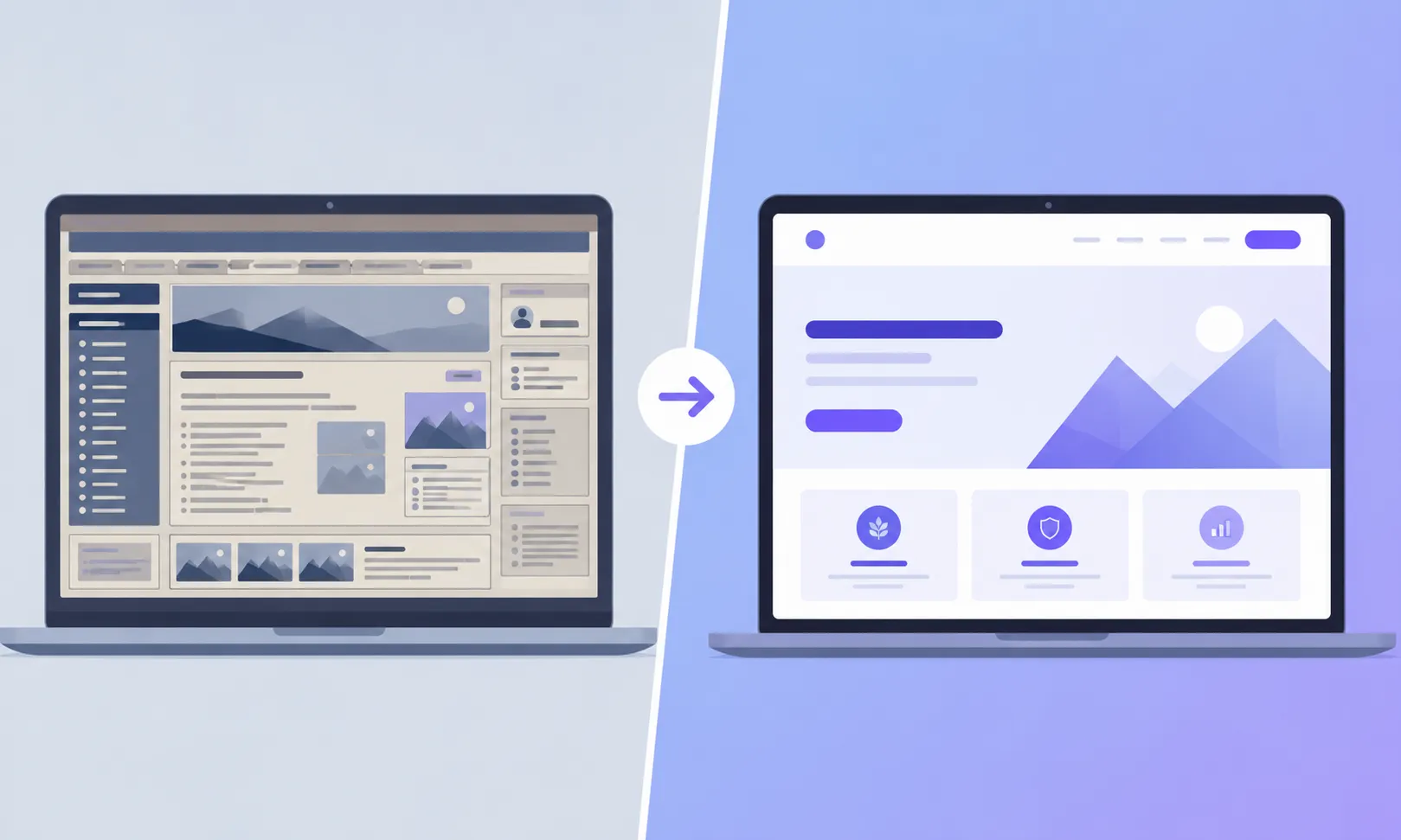
When that happens, your site ends up saying something different than what you actually tell people on the phone or in person. A contractor who's moved into bigger commercial jobs but still has a homepage full of small residential photos sends a mixed message. People get confused about what you actually do, and confused people don't call.
Problems With How Your Website Works for Visitors
3. Your Website Is Hard to Use on a Phone
Most people checking out your business right now are doing it from their phone, not a desktop computer. If they have to pinch and zoom to read your text, tap tiny buttons, or scroll forever to find your phone number, they'll probably just leave and check the next business on the list.
A website that "works" on a phone in theory isn't the same as one built for how people actually use their phones: fast, often while doing something else, with very little patience for anything that feels clunky.
4. People Can't Find What They're Looking For
A website should make it easy for someone to find what they came for. If your menu has too many options, your pages feel cluttered, or your most important information is buried three clicks deep, people get frustrated and leave.
This usually happens slowly. You add a new service page here, a new section there, and after a few years the site stops matching how your customers actually think or search for what you offer.
5. People Visit Your Site But Don't Contact You
If you're getting traffic but not calls, bookings, or quote requests, the problem usually isn't that people don't need what you offer. It's that your website doesn't make it obvious what to do next.
This shows up as a "Contact Us" button buried at the bottom of the page, a form that asks for way too much information before someone will even hear back from you, or pages that explain your business in detail but never actually ask the visitor to do anything. Every page on your site should make the next step obvious, not just your homepage.
Website Speed and Google Search Problems
6. Your Website Loads Slowly
Nobody waits around for a slow website anymore. If your pages take more than a couple seconds to load, people hit the back button and try the next search result instead. That's a customer who never even saw what you offer.
Slow load times usually come from oversized photos, old website code, too many plugins, or cheap hosting. These are also things Google pays attention to when deciding how high to rank your site, so a slow website can hurt you twice: once with visitors, and again in search results.
7. You're Showing Up Less in Google Search
If your traffic from Google has dropped off, or you're not showing up for searches you used to rank for, your website itself might be part of the problem, not just your content.
An outdated site structure, missing basics that help Google understand your pages, slow loading, and a clunky mobile experience all work against you. You can write great content and still get buried in search results if the website underneath it is weak.
Problems That Hold Your Business Back As You Grow
8. Updating Your Website Is a Hassle
You should be able to update a price, swap a photo, or add a new page without calling a developer and waiting a week. If every small change feels like a project, your site is working against you instead of for you.
This is common with older websites or ones built on outdated systems. Eventually, teams just stop updating the site because it's too much trouble, and the content quietly goes stale.
9. Your Website Can't Keep Up With New Parts of Your Business
As your business grows, you probably need more from your website: online booking, a client login, payment processing, or some kind of automation that saves your team time. A lot of older websites simply weren't built to handle any of that, so adding new features turns into a patchwork of workarounds.
If your team has started saying "the website can't really do that" about new ideas, your site has gone from helping your business grow to slowing it down.
10. Your Competitors' Websites Look and Work Better Than Yours
Most people check out a few options before they pick one, and your website is often the tiebreaker. A competitor with a faster, cleaner, easier-to-use site looks more put together, even if your actual work is just as good or better.
This one is easy to check for yourself. Pull up your top three competitors on your phone and look at their sites honestly next to yours. If you'd pick theirs over yours as a first-time visitor, that tells you something.
Is It Time for a Redesign?
Not every website needs to be torn down and rebuilt. Sometimes small fixes, like a faster host or a cleaned-up menu, solve most of the problem. But if several of the signs above sound familiar, it's worth taking an honest look at whether your website is actually helping your business or just something you've learned to work around.

Here's a quick way to check. Ask yourself:
Would someone landing on my site for the first time immediately understand what I do and who I help?
Could someone book, buy, or contact me in under a minute from their phone?
Does this site look and read like my business today, not three years ago?
Would I be proud to text this link to a customer I really want to land?
If you answered no to any of these, that's worth paying attention to.
A good redesign isn't just a new look. Done right, it should make your site easier to use, faster to load, easier to find in search, and easier for your team to update, all at the same time. The new look is usually the most noticeable part, but it shouldn't be the only thing that changes.
How Altreonix Helps Businesses Update Their Website
Whether you need a new website, a custom web app, some automation to save your team time, or AI tools built into how you work, the starting point is always the same: figuring out exactly where your current website is causing problems, for your customers and for your own team.
At Altreonix, we look at your site across design, ease of use, speed, and search performance, then build something that fits where your business is actually headed, not just where it's been.
The goal isn't just a new website. The goal is a website that actually works for your business instead of against it.