Introduction
Most business owners assume that low leads mean low traffic. So they spend more on ads, more on SEO, more on content, and the enquiries still don't come.
The real issue is usually sitting on the website itself.
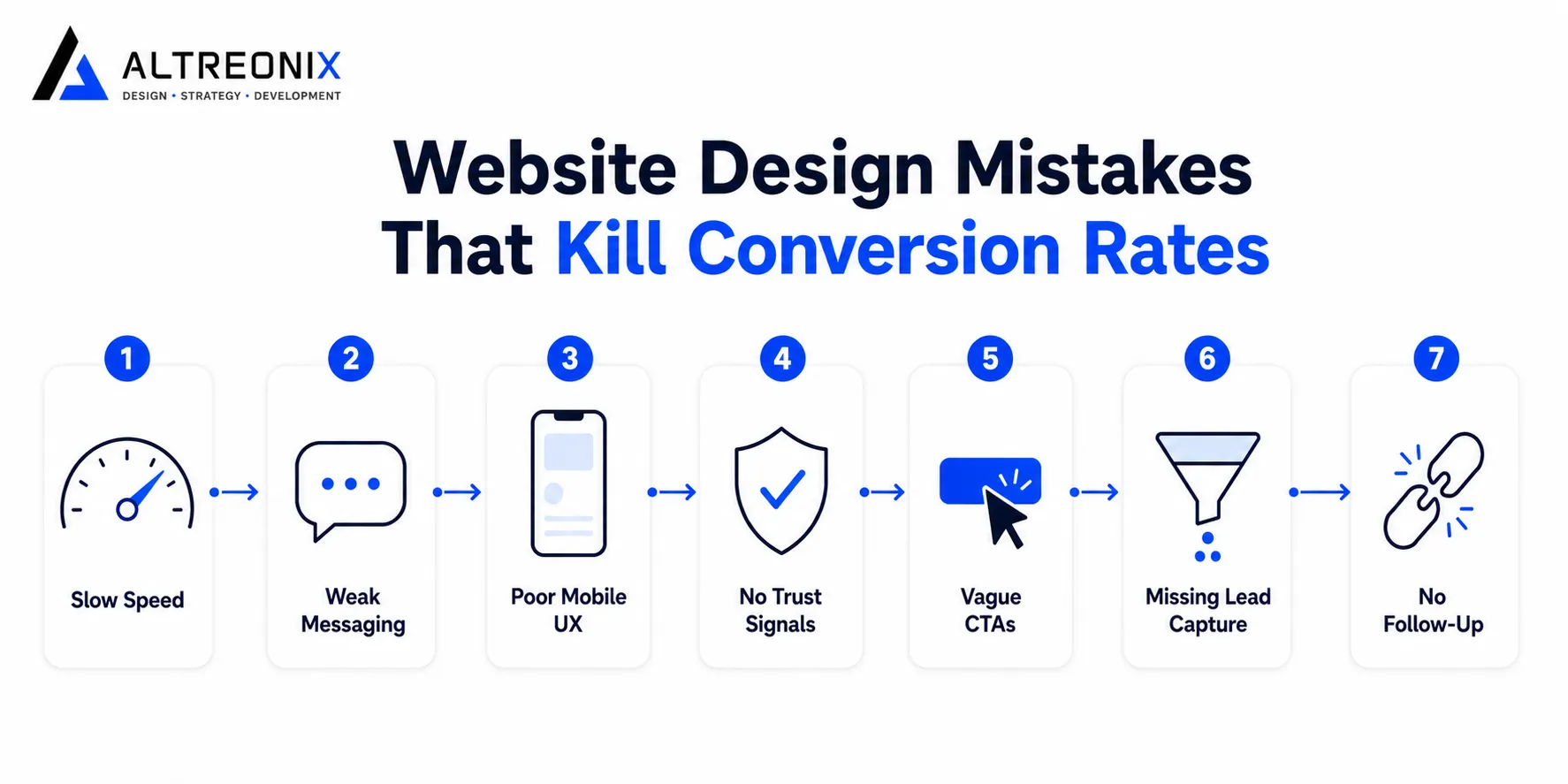
A site can rank well, get visitors every day, and still fail to turn any of them into a phone call, a booking, or a sale. That gap rarely comes down to one bad decision. It's usually a mix of weak messaging, slow pages, missing trust signals, and a follow-up process that quietly drops every lead that comes in.
Here's a breakdown of the mistakes that cause this, and what to do about each one.
1. You're designing for looks, not for leads
A lot of websites get built like portfolio pieces. Big hero banners, smooth animations, a layout that looks great in a screenshot.
None of that answers the questions a visitor actually has in their first ten seconds on the page:
What does this business do?
Can they solve my specific problem?
Why should I trust them over the next result on Google?
What am I supposed to do next?
If a visitor can't answer those quickly, they leave, no matter how polished the design is. A site that converts well treats every section as a step toward an answer, not a visual flourish.
2. Your site is slow, and visitors notice immediately
Speed isn't a technical detail anymore. It's one of the first things a visitor experiences, often before they've read a single word.
A few common causes:
Images that haven't been compressed
Heavy JavaScript and bloated page builders
Too many third-party scripts (chat widgets, tracking pixels, ad tags)
Hosting that wasn't built for the traffic the site gets
Render-blocking CSS and fonts
Google measures this through Core Web Vitals, namely Largest Contentful Paint, Interaction to Next Paint, and Cumulative Layout Shift. You can check where your own site stands using PageSpeed Insights, and if you want to understand what the scores actually mean for ranking and user experience, web.dev's Core Web Vitals guide breaks it down well.
A plain site that loads fast will usually outperform a beautiful one that loads slow.
3. People don't understand what you actually do
This shows up more often than design flaws do. The headline is vague, the copy leans on industry jargon, and the whole page talks about the company instead of the customer.
A visitor should be able to tell, within a few seconds, what you do, who it's for, what they get out of it, and what to click next. Skip any of those and bounce rates climb, even on pages that are technically well designed.
4. Your mobile experience is an afterthought
For most businesses, more than half of website traffic now comes from phones. Yet a lot of sites are still designed on a desktop screen first and adjusted for mobile later, if at all.
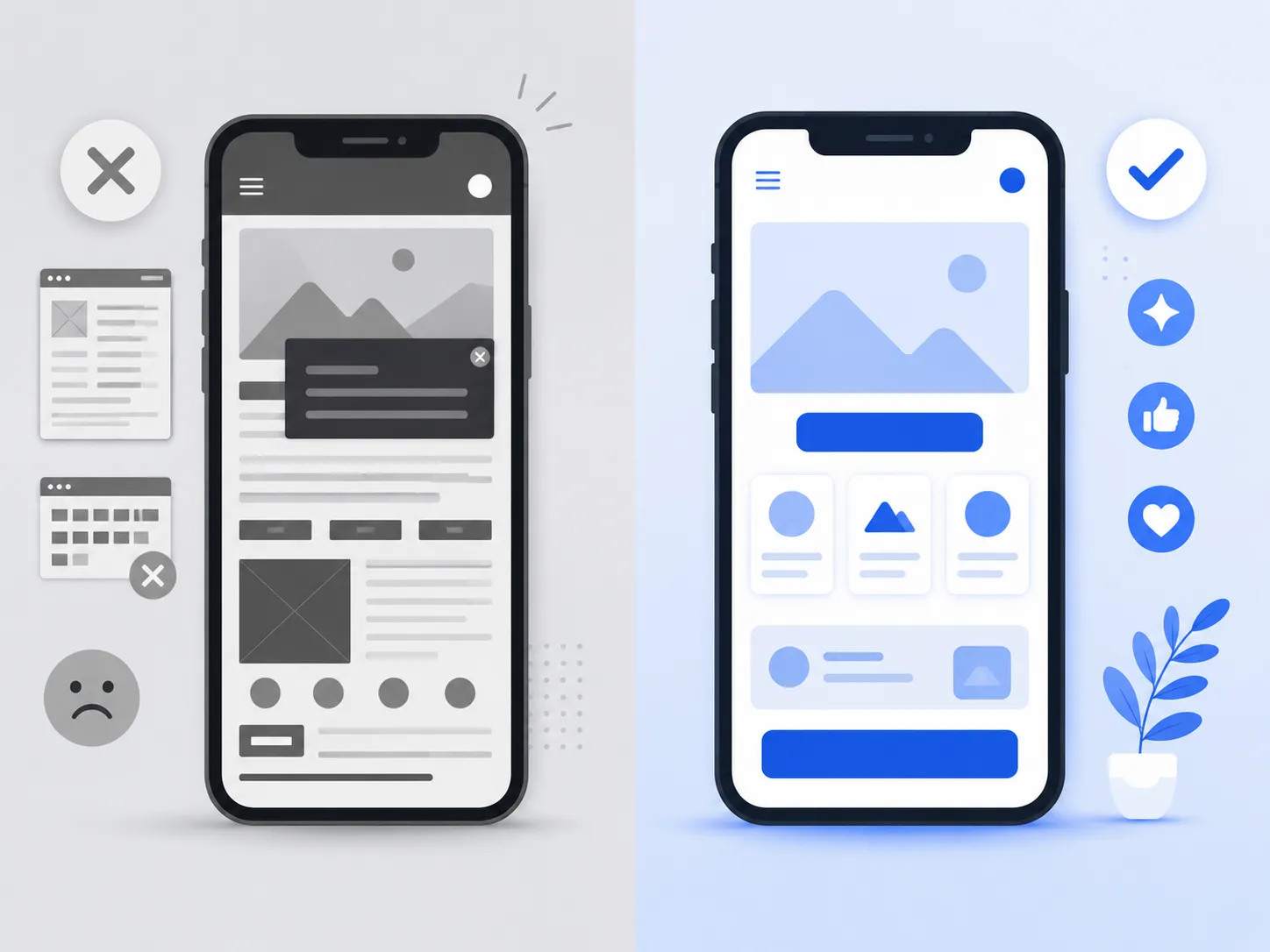
That shows up as buttons that are too small to tap accurately, menus that are awkward to use, forms that are painful to fill out, images that spill off the screen, and pages that load noticeably slower on mobile data.
Designing mobile-first, rather than just mobile-compatible, tends to close a lot of this gap on its own.
5. Your content doesn't match what people are searching for
Traffic doesn't generate leads. Matching intent does.
If someone searches "website redesign services for small businesses" and lands on a page filled with company history and award logos, their question is still unanswered, and they'll go find a site that actually answers it.
Every important page should be built around one specific question or problem, not a general overview of the business. The tighter that match, the higher the conversion rate, usually without any other changes needed.
6. You only offer one way to convert
Most visitors aren't ready to buy the first time they land on your site. But a lot of websites only give them one option: "Contact Us."
That ignores everyone who's still researching. Lead magnets give those visitors a lower-commitment way to engage: an audit checklist, a planning guide, a free calculator, a short assessment, a template they can use right away.
Without something like this, a large chunk of interested visitors simply leave and never come back, because there was nothing for them to take with them.
7. Your calls to action are vague
"Learn More." "Submit." "Click Here." None of these tell a visitor what actually happens after they click, and vague CTAs consistently underperform specific ones.
Compare that to:
"Request a Website Audit"
"Book a Discovery Call"
"Get a Project Estimate"
"Download the Checklist"
Every page that matters should have one clear, specific next step. Not three competing ones, just one.
8. Your forms ask for too much, too soon
Asking for company size, budget, full address, and five other fields before someone's even spoken to you is a fast way to lose them. Every extra field on a form increases the chance someone abandons it halfway through.
A better approach uses progressive profiling, smart field validation, conditional logic, and multi-step forms where it makes sense. The goal at this stage is to start a conversation, not collect a full intake form.
9. The technical SEO basics are missing
A lot of sites lose potential customers before those customers ever see the page, simply because search engines can't find or understand the content properly.
This usually comes down to a handful of things: an outdated or missing XML sitemap, a robots.txt file that's accidentally blocking important pages, canonical tags that aren't set up correctly, and internal links that don't connect related pages in any logical way.
None of these directly cause a sale. But get them wrong and the right audience never finds the site to begin with. Google Search Central is the most reliable source for getting these fundamentals right, straight from the people who built the algorithm reading your site.
10. You're not using structured data
Search engines lean more and more on structured data to understand what a page is actually about, and most business websites still have little to none of it.
Worth implementing where relevant: Organization schema, LocalBusiness schema, Service schema, Article schema, FAQ schema, Breadcrumb schema, and Review schema. The full specification and examples live on Schema.org, which is the standard most search engines reference.
Done properly, this helps your listing stand out in search results and gives Google a clearer picture of what you actually offer.
11. There's nothing on the page that builds trust
People decide whether to trust a business almost instantly, often before reading a single sentence of copy.
Testimonials, case studies, certifications, client logos, real project examples, security badges: these aren't decoration. They're often the deciding factor between a click and a bounce. People rarely act on claims alone. They act on evidence that someone else has already had a good experience.
12. You're not tracking what actually matters
A lot of businesses can't explain why conversions are low, because they're not actually measuring the things that lead to a conversion.
That means tracking CTA clicks, form starts (not just completions), scroll depth, downloads, phone number clicks, and booking completions, not just overall traffic and bounce rate. Without that data, every change to the site is a guess instead of a decision.
13. Leads disappear after the form is submitted
This is where a lot of otherwise decent websites quietly fail. Someone fills out a form, and then nothing happens. No CRM entry, no automated reply, no notification to sales, no follow-up sequence.
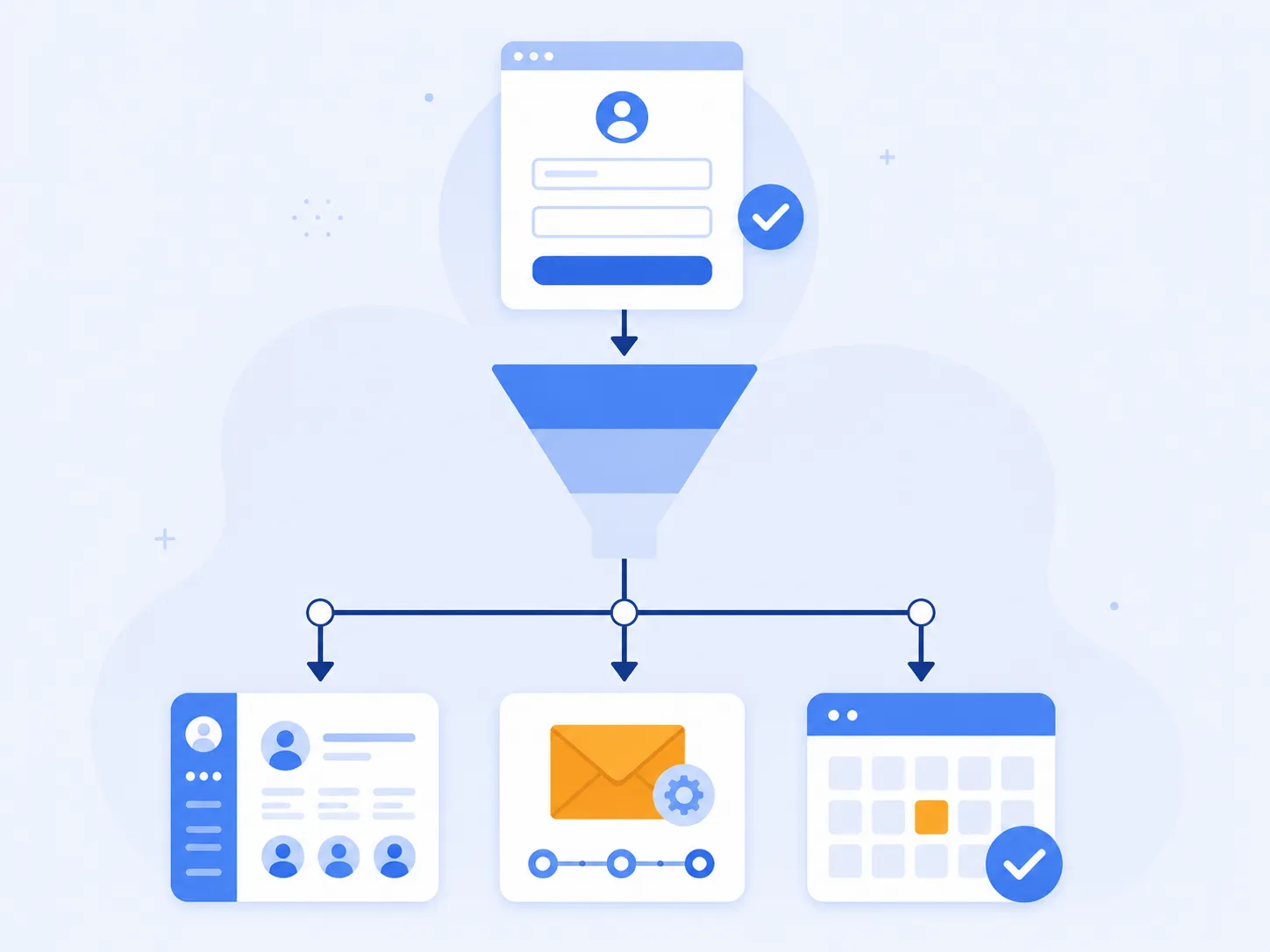
The lead sits in an inbox until it goes cold.
A website that's actually built to convert connects directly into a CRM, an email automation tool, a booking calendar, and whatever onboarding process comes next. Getting the lead is only step one. What happens in the next 24 hours usually decides whether it turns into a customer.
14. You're treating the website as a project instead of a system
The sites that consistently convert well aren't just well designed. They combine clear messaging, fast load times, solid technical SEO, content that matches search intent, more than one way to convert, visible trust signals, real tracking, and a connected follow-up process.
Take any one of those away and the rest start to underperform. Put them all together and the website stops being a digital brochure and starts working like an actual growth channel for the business.
The bottom line
Low conversion rates are almost never caused by one thing. They're usually the result of several smaller gaps, technical, strategic, and operational, stacking up quietly over time.
Fixing that takes more than a visual refresh. It means looking at whether the site is fast, discoverable, trustworthy, aligned with what people are actually searching for, and connected to the systems that turn an enquiry into a customer.
If your website is bringing in traffic but not enquiries, the design might be the smallest part of the problem. Our team can take a closer look at the full picture through our website design and development services.